
PRESS COVERAGE
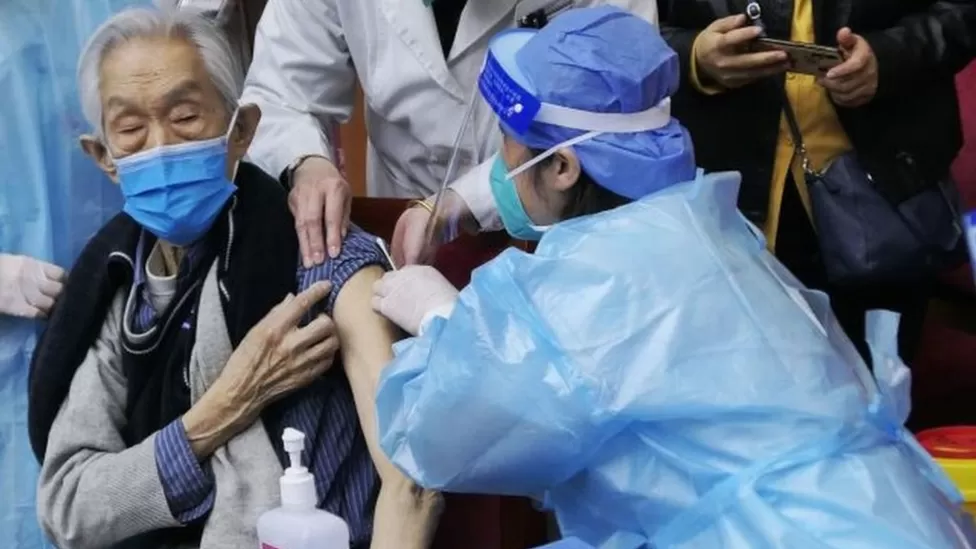
In December, China dropped mass testing in cities and regions where there have been outbreaks.
People are no longer required to go into quarantine in state facilities if they or someone they have been in contact with tests positive. There are reports of hospitals filling up with patients and a growing demand for funeral services.
But officially, China is reporting relatively low numbers of Covid cases and a tiny number of deaths.
Because it has ended its mass testing programme, Chinese authorities no longer have reliable figures for the number of Covid infections.
The World Health Organization (WHO) has asked it to provide specific data on disease severity and hospital admissions.

Passport applications for Chinese citizens wishing to travel internationally will resume from 8 January, the immigration administration said.
It follows an announcement on Monday that ended almost three years of strict quarantine rules for arrivals.
Travel sites have since reported a spike in traffic.
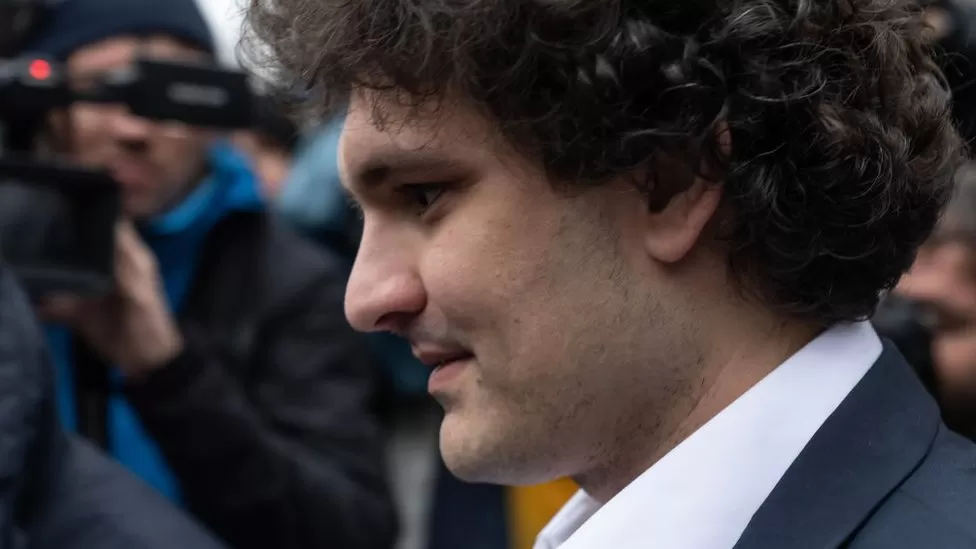
However, a US bankruptcy court was told on Wednesday that the extent of losses to customers is still not known.
Prosecutors have accused FTX’s former chief executive Sam Bankman-Fried of orchestrating an “epic” fraud that may have cost investors, customers and lenders billions of dollars.
Mr Bankman-Fried has pleaded not guilty to charges that he cheated investors.
“We have located over 5 billion dollars of cash, liquid cryptocurrency and liquid investment securities,” Andy Dietderich, an attorney for FTX, told US Bankruptcy Judge John Dorsey in Delaware.

Mr Santos, who was elected in New York, told the New York Post: “My sins here are embellishing my resume. I’m sorry.”
He insisted he was “not a criminal” and said that the controversy would not deter him from serving his two-year term in Congress.
The allegation was first made in a New York Times report last week.
At the time, a lawyer for Mr Santos hit back at the claims that he misrepresented where he went to college and his alleged employment history, describing them as “defamatory” and a “shotgun blast of attacks”.
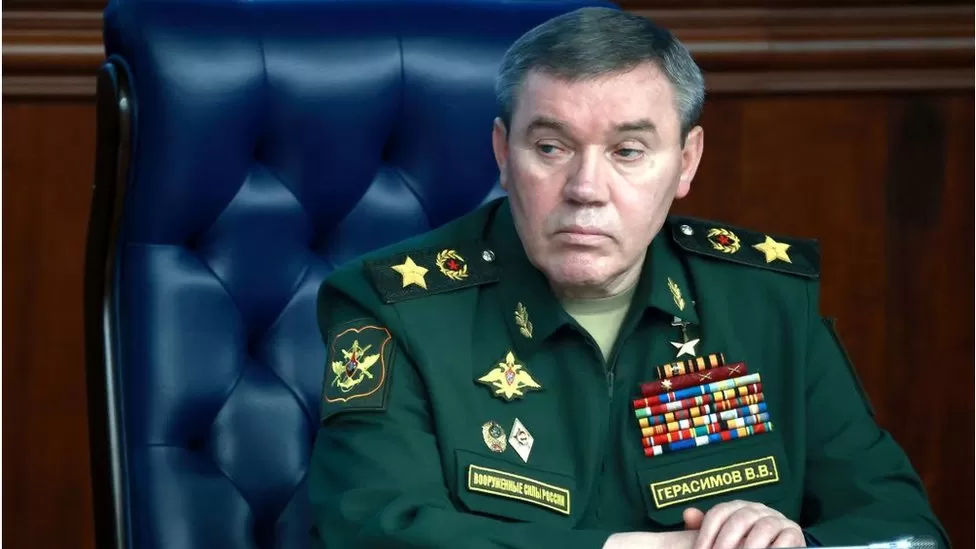
Chief of the General Staff Valery Gerasimov will now lead what Mr Putin terms a “special military operation”.
Gen Gerasimov replaces Sergei Surovikin who has overseen recent brutal attacks on Ukraine’s energy infrastructure.
The reshuffle comes as Russians claim they are making progress in eastern Ukraine after suffering a series of military defeats in recent months.
Russia launched its invasion into Ukraine on 24 February.
Gen Gerasimov, who has been in post since 2012, is the longest-serving Russian chief of general staff of the post-Soviet era.
Gen Surovikin – now his deputy – has been dubbed “General Armageddon” for his brutal tactics in previous wars, including Russia’s operations in Syria and the heavy bombardment of the city of Aleppo in particular.
Shortly after he was appointed to lead the operation in October, Russia began its campaign to destroy Ukraine’s energy infrastructure, leaving millions of Ukrainian civilians without power or running water for extended periods in the depths of winter. He also oversaw Russia’s withdrawal from the southern city of Kherson – a major success for the Ukrainians.
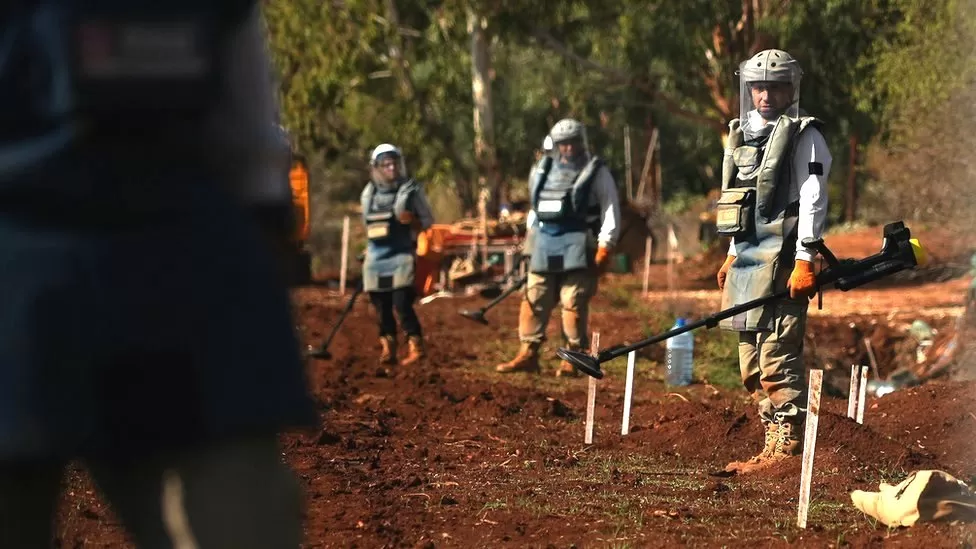
Red-painted sticks dug into the ground mean danger. Tread any further and you risk stepping right onto a mine. White sticks are the sign of a safe, cleared channel. Black sticks show where an anti-tank mine used to lie, with the explosives inside now burnt away.
Wearing protective gear is vital. That means a helmet with a visor that wraps around your face from ear to ear and covers well below the chin. Protective body armour drops almost to your knees, shielding your vital organs and arteries from the impact of any accidental blast.